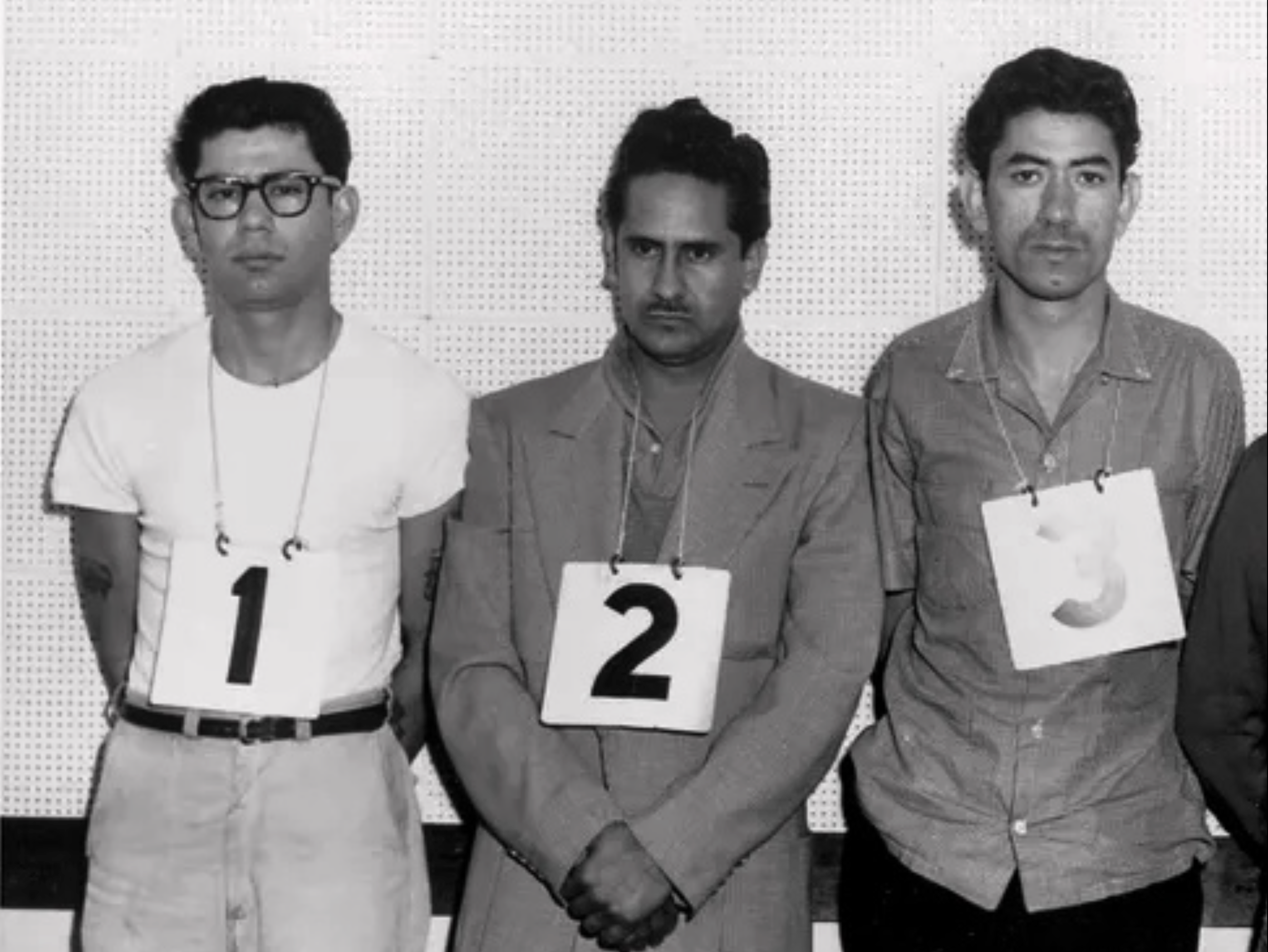
Ernesto Miranda was a 23-year-old Phoenix man with a prior criminal record when he was arrested in 1963 for the kidnapping and rape of an 18-year-old woman. After being taken into police custody, he was interrogated for about two hours and ultimately signed a written confession. At no point, however, was he informed that he had the right to remain silent, that anything he said could be used against him in court, or that he had the right to an attorney — protections guaranteed by the Fifth Amendment’s protection against self-incrimination and the Sixth Amendment’s right to counsel. His confession became the central evidence at his trial, leading to his conviction and a sentence of 20 to 30 years in prison. His court-appointed attorney appealed, arguing that the confession was not truly voluntary because Miranda had not been made aware of his constitutional rights. The case eventually reached the U.S. Supreme Court, which in 1966 issued a narrow 5–4 decision in Miranda v. Arizona, ruling that police must inform suspects of their rights before custodial interrogation. This landmark ruling established what are now known as “Miranda warnings,” fundamentally changing police procedures across the United States. Miranda’s original conviction was overturned, but he was later retried without the confession; this time, prosecutors relied on witness testimony and other evidence, and he was convicted again, serving about 11 years before being released on parole in 1972. In an ironic and tragic twist, Miranda was stabbed to death in 1976 during a bar fight in Phoenix. Police detained a suspect in the killing, but when questioned, the suspect invoked his right to remain silent and requested a lawyer — exercising the very Miranda rights that existed because of Ernesto Miranda’s Supreme Court case. The suspect was released due to lack of evidence, and the murder was never solved, leaving Miranda’s life and death closely tied to one of the most significant criminal procedure decisions in American history.